10 hr
Chobe National Park Safari Day Trip from Victoria Falls
- Expert local guide
- Small group
- Skip-the-line access
- Free cancellation
Chobe National Park Full Day Safari — Game Drives & River Cruises
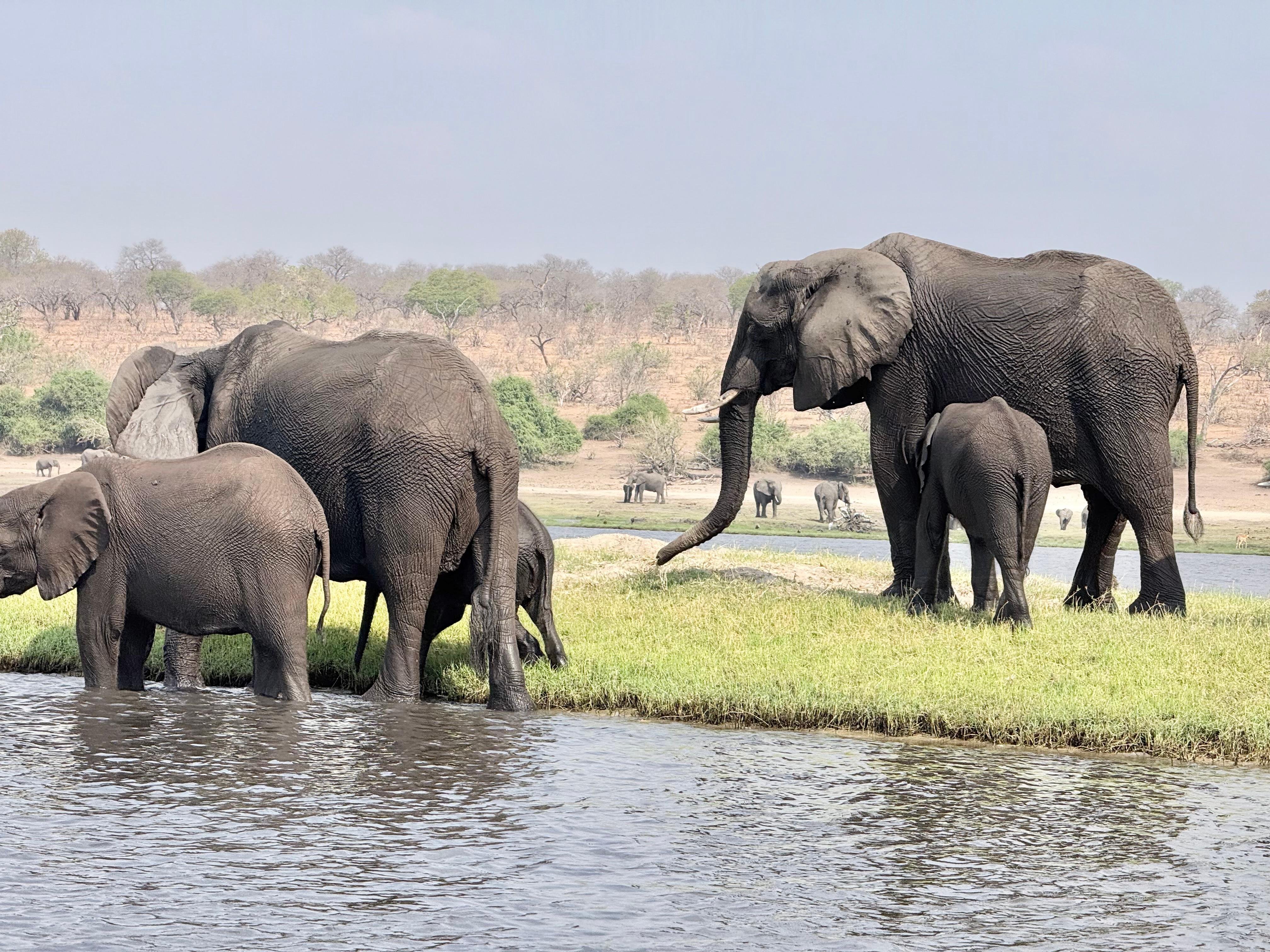
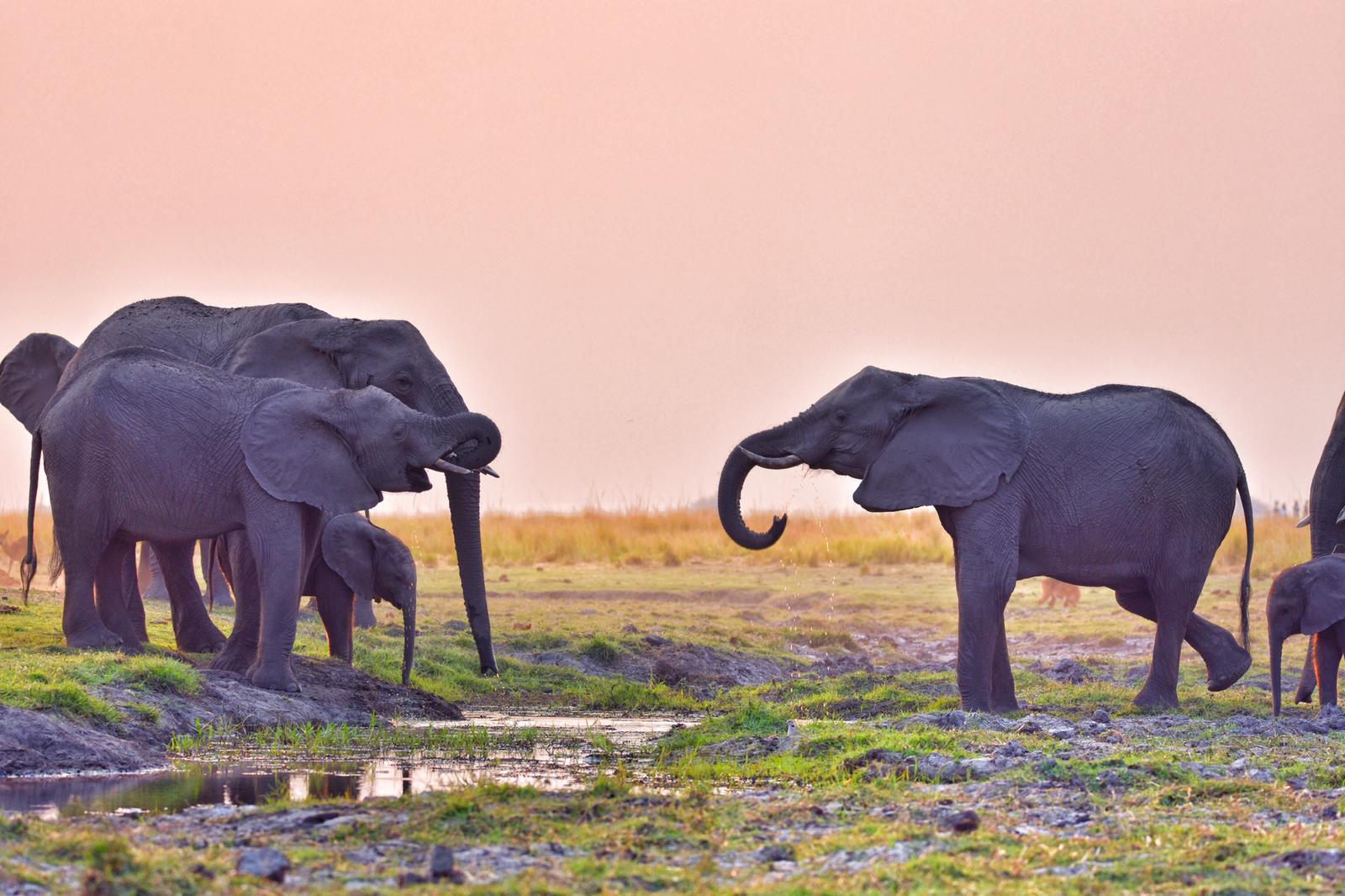
Africa's highest elephant density, where river and savanna meet
Compare fares, pick the fit — all bookings are mobile-voucher and eligible for free cancellation where shown.
10 hr
11 hr
8 hr
| Experience | From | Duration | Rating | Skip-the-line | Guide | Small group | Price | |
|---|---|---|---|---|---|---|---|---|
|
Guided Experience
Most popular
Chobe National Park Safari Day Trip from Victoria Falls
|
Victoria Falls | 10 hr | ★ 4.7 | ✓ | ✓ | ✓ | $170 | Book → |
|
Guided Experience
Chobe National Park Safari from Victoria Falls
|
Victoria Falls | 11 hr | ★ 4.7 | ✓ | ✓ | ✓ | $180 | Book → |
|
Guided Experience
Chobe National Park Full-Day Safari from Kasane
|
Kasane | 8 hr | ★ 4.6 | ✓ | ✓ | ✓ | $122 | Book → |
Worth it for wildlife enthusiasts and photographers
A chobe national park full day safari delivers exceptional value through sheer animal density and habitat variety. The park shelters Africa's largest elephant population—over 50,000 individuals—concentrated along the Chobe River, creating wildlife encounters that rival any reserve on the continent. Full-day packages combine morning game drives through mopane woodland with afternoon river cruises, exposing you to predators, plains game, and hundreds of bird species across two ecosystems in one outing. The 270 BWP conservation fee supports anti-poaching patrols and habitat protection, while guided tours from Kasane or Victoria Falls handle logistics and maximize sighting windows during the optimal early hours. Safari guides with decades of local knowledge position you for lion prides, leopard sightings, and hippo pods that independent visitors often miss. For photographers chasing African megafauna or first-time safari-goers wanting comprehensive game viewing without multi-park itineraries, chobe national park full day safari tours justify the cost through unmatched elephant abundance and dual-perspective access to the Chobe riverfront.
Bottom line: The combination of guaranteed elephant herds, predator opportunities, and dual-habitat access makes chobe national park full day safari tickets a solid investment for serious wildlife viewing.
They complement each other; most visitors who do both call the combined chobe national park full day safari tour the more complete, immersive experience.
|
Top pick Full Day Safari |
River Cruise Only | |
|---|---|---|
| Focus Area | Riverfront and inland woodlands | |
| Primary Wildlife | Big cats and woodland species | |
| Viewing Angle | Ground-level from 4x4 vehicle | |
| Terrain Access | Wide-ranging park exploration | |
| Intensity | High-action and immersive | |
| Typical Duration | 7–9 hours | |
| See tickets & prices |
Verdict: Opt for the full day safari if you want to maximize terrestrial predator sightings, while the cruise is superior for relaxed, up-close aquatic wildlife photography.
Hand-picked experiences loved by thousands of travelers
1 day
Free Cancellation
Dual safari adventure combining game drives and boat cruises in one of Africa's premier wildlife parks
10 hours
Free Cancellation
Morning river cruise and afternoon game drive through Africa's premier elephant territory
10 hours
Free Cancellation
Cross into Botswana for an unforgettable wildlife adventure in one of Africa's premier game reserves
10 hours
Free Cancellation
Cross three borders in one day: wildlife spotting in Chobe, village life in Namibia, riverside lunch
10 hours
Free Cancellation
Full-day Botswana wildlife expedition with morning 4x4 safari, riverside lunch, and afternoon river cruise
12 hours
Free Cancellation
Cross into Botswana for a 12-hour safari combining river cruise, game drive, and lunch at Chobe National Park
6 hours
Free Cancellation
Track big game by 4×4 at dawn, then drift past hippos and elephants as the sun sets over the river.
9 hours
Free Cancellation
Explore Botswana's wildlife paradise with a river cruise and open-vehicle safari through Chobe National Park
Famous for massive elephant herds and buffalo concentrations that drink at the water edge during the day.
A lush, flood-prone island that serves as a vital grazing area for wildlife and a prime spot for river cruises.
A primary game-viewing route that offers frequent sightings of diverse plains game and predators in their natural habitat.
Known for a more rugged wilderness experience and the unique behavior of predators in this expansive grassy environment.
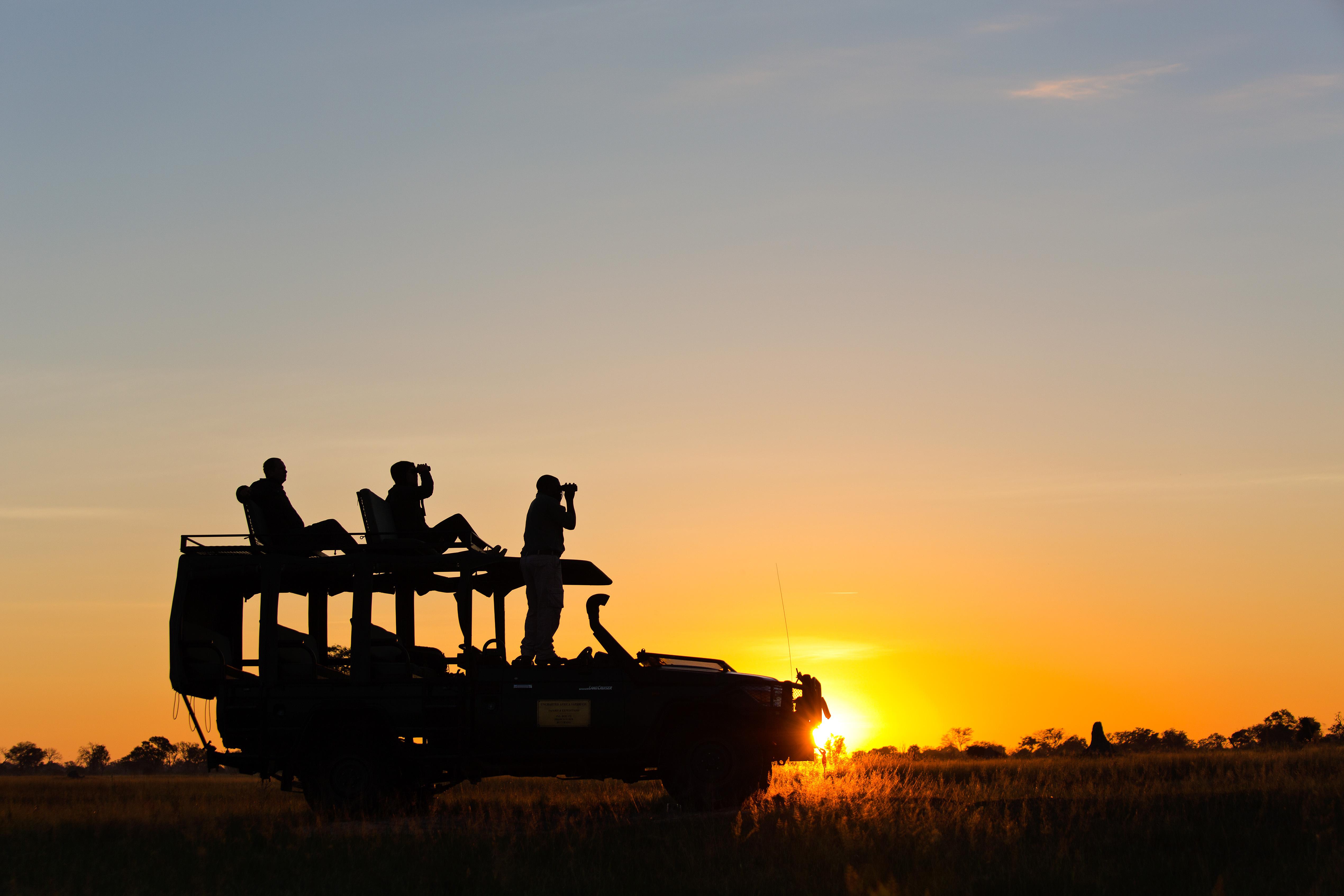
You cross the Sedudu gate at first light, when mist still clings to the Chobe's surface and the air carries the scent of wet sand. Your guide steers north into mopane woodland, tracking fresh spoor along the loop road.
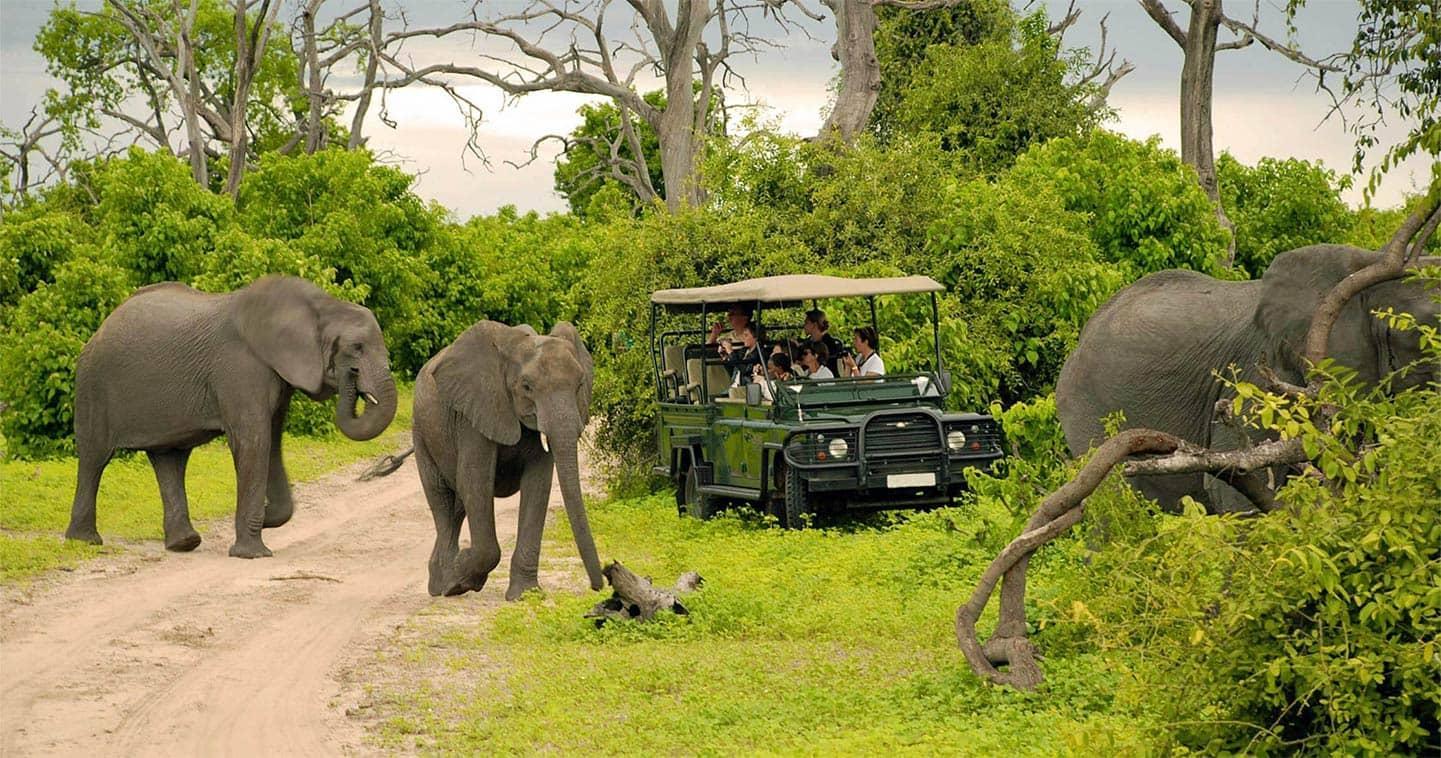
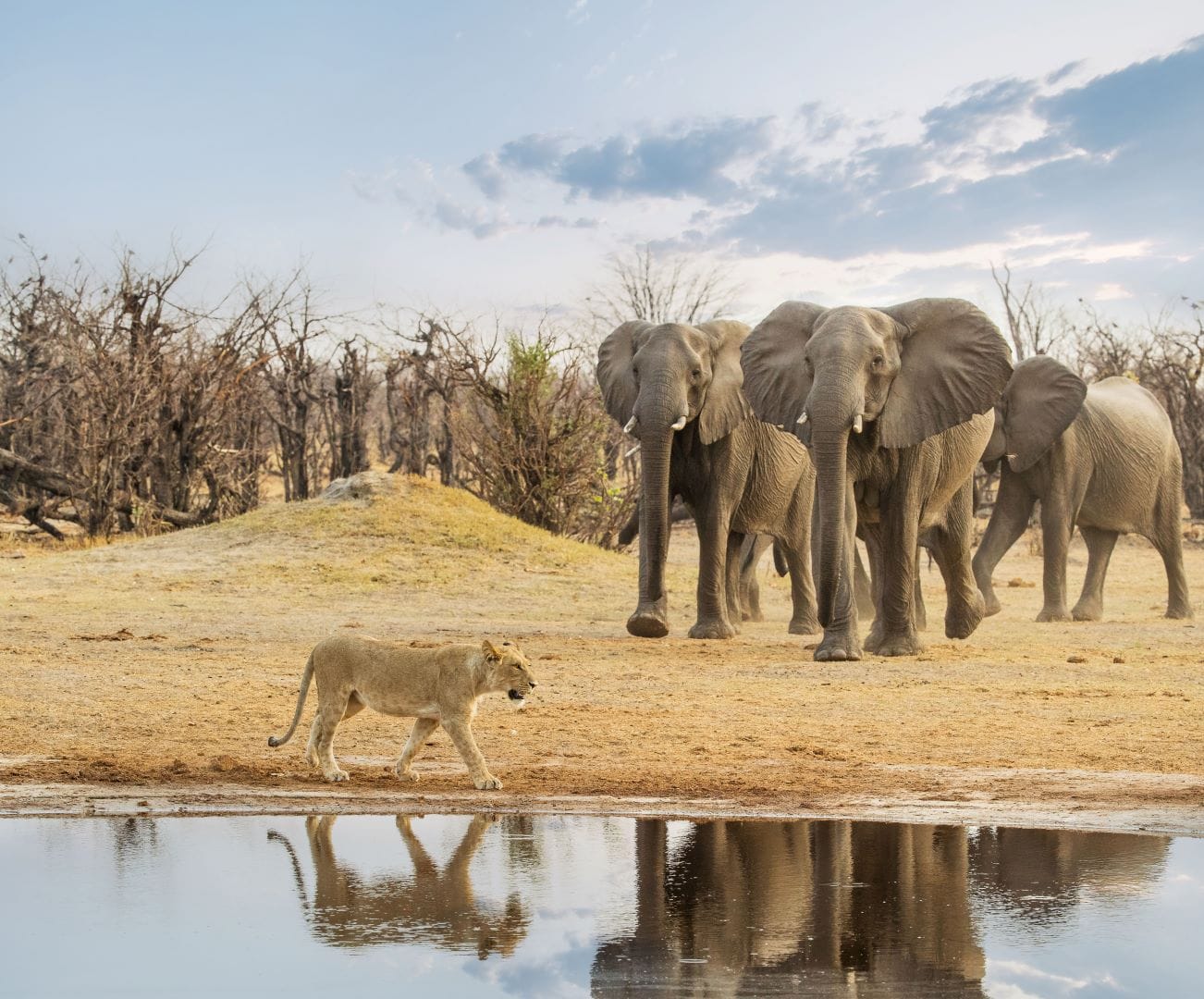
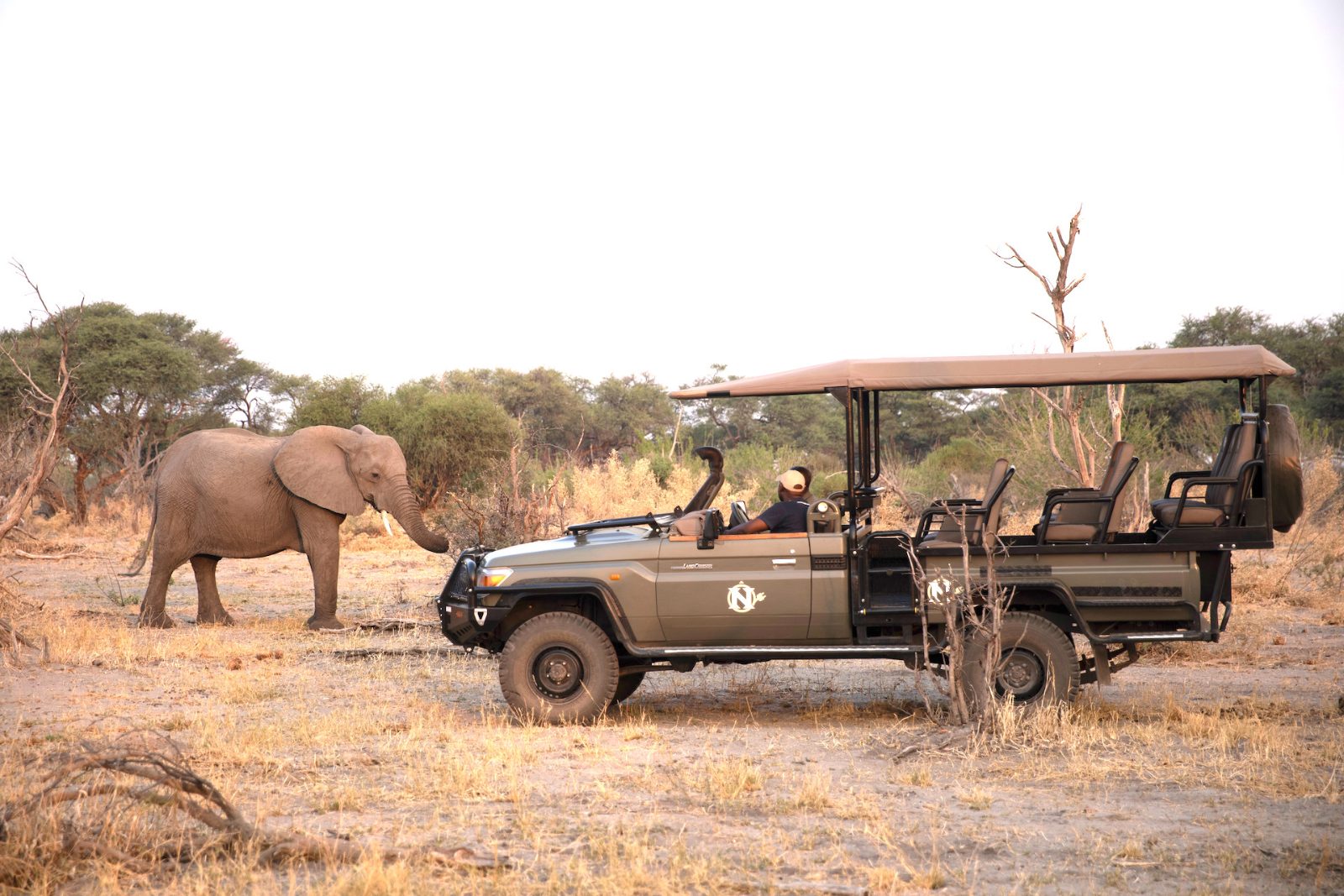
Within twenty minutes you pause beside a breeding herd — forty elephants stripping bark from leadwood trees, calves pressed against their mothers' flanks. The vehicle idles. You count six bulls, tusks scored white where they've scraped termite mounds.
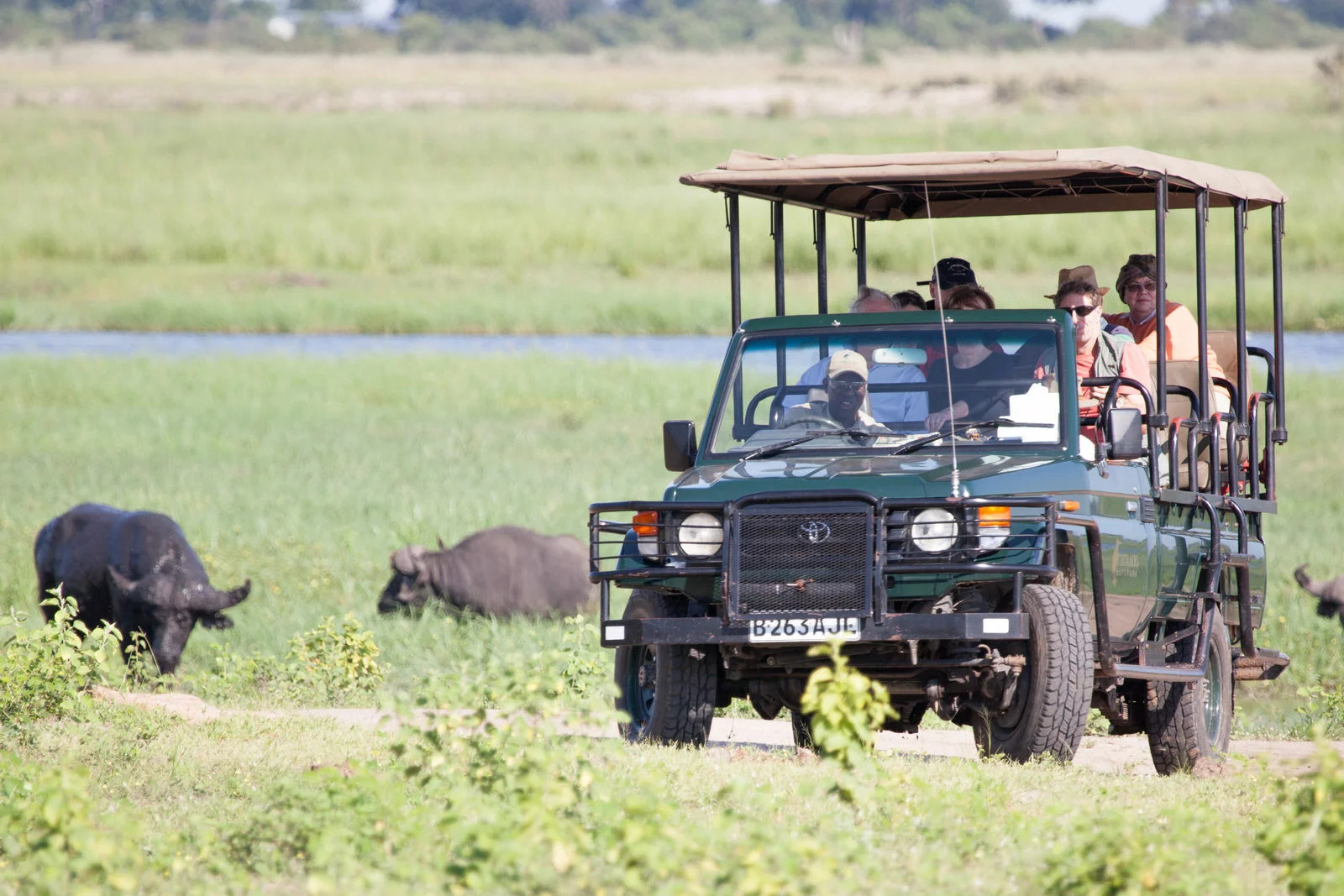
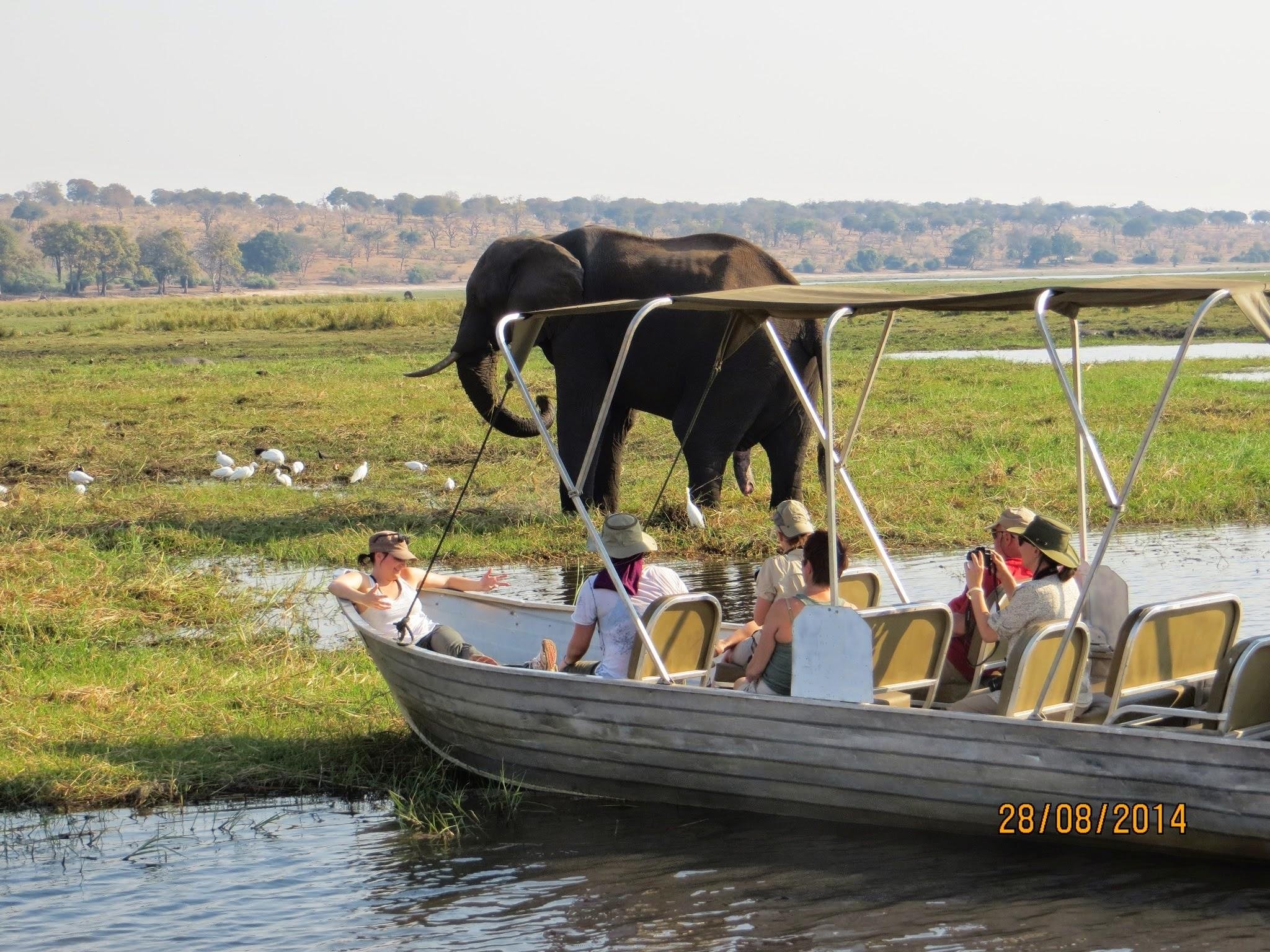
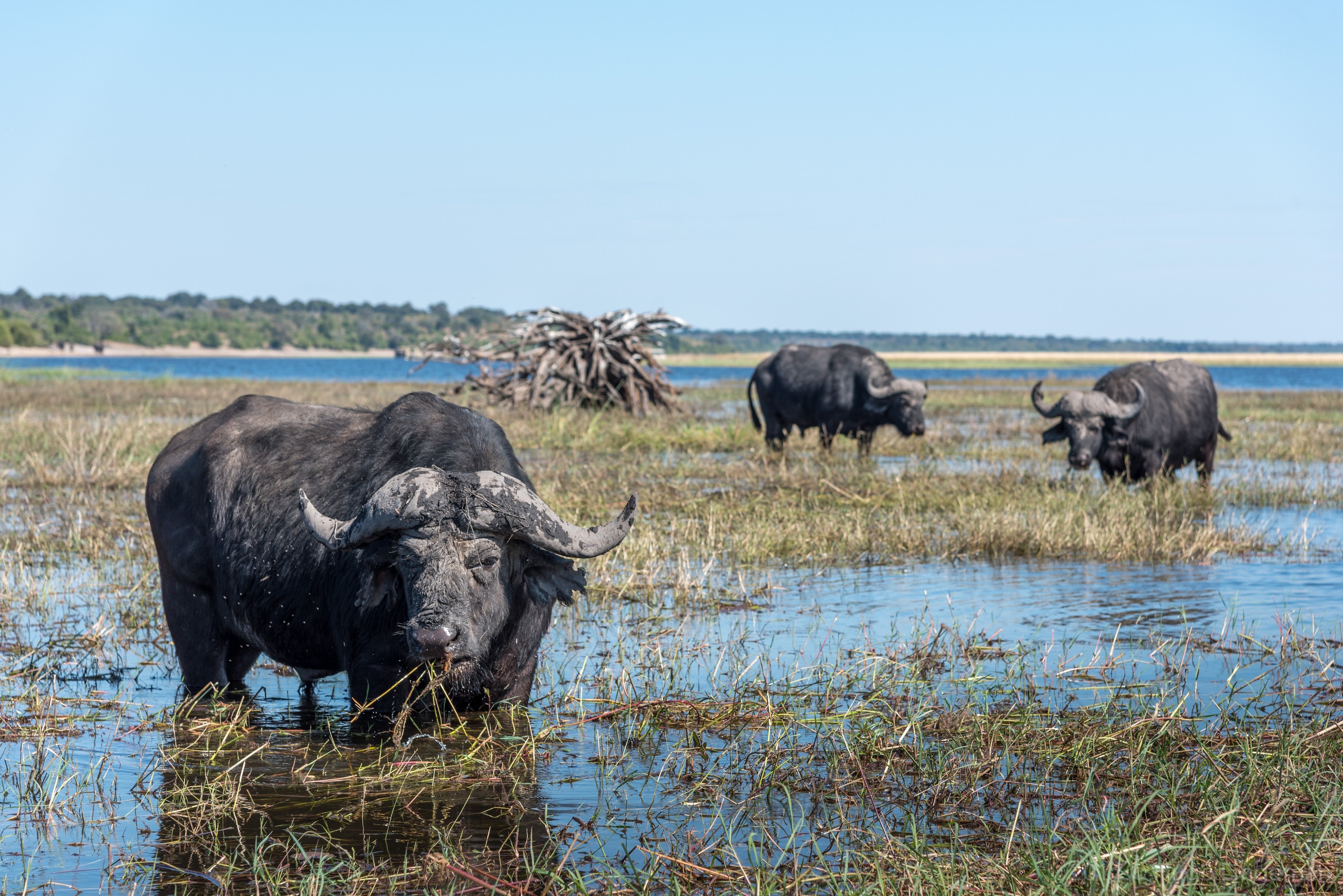
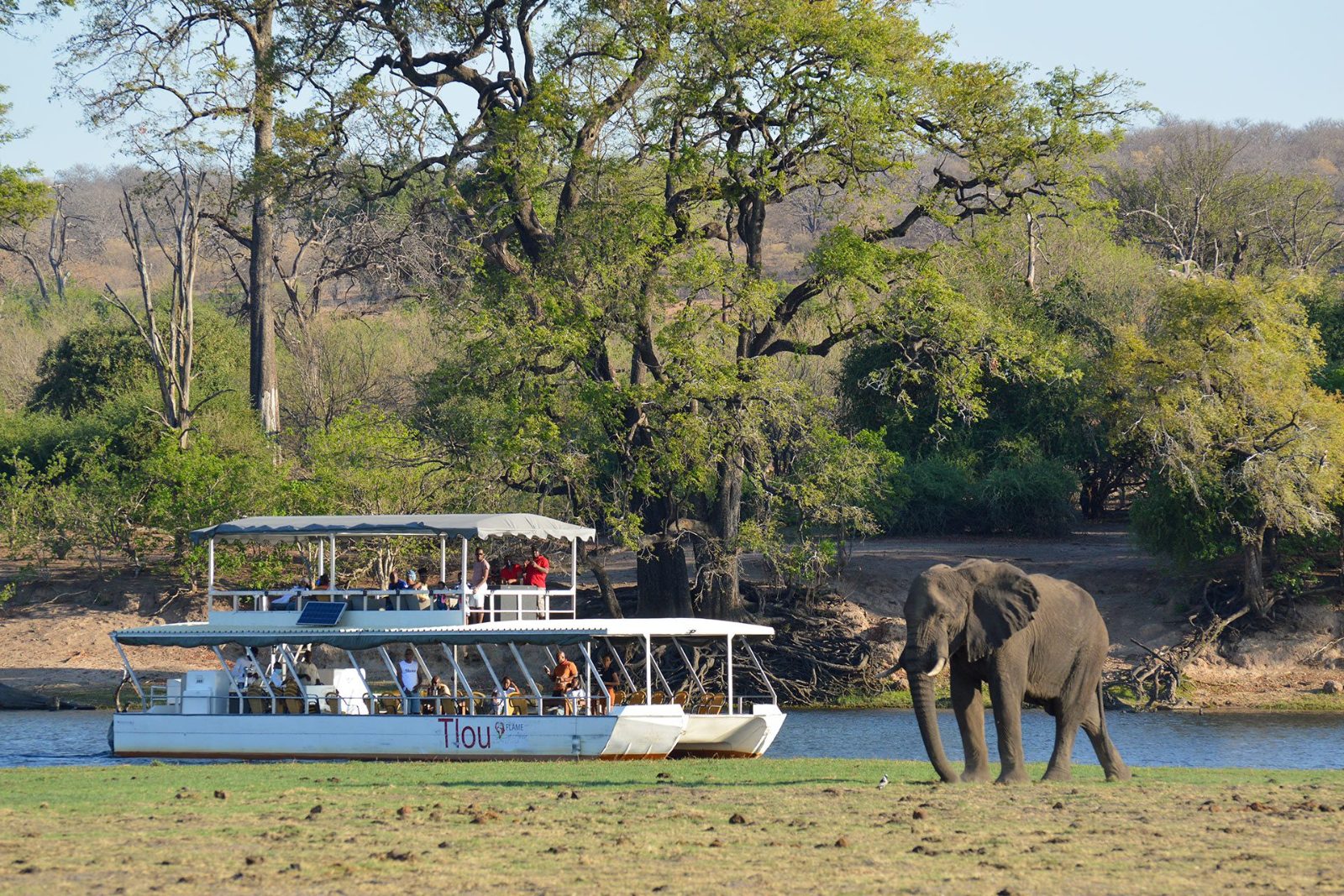
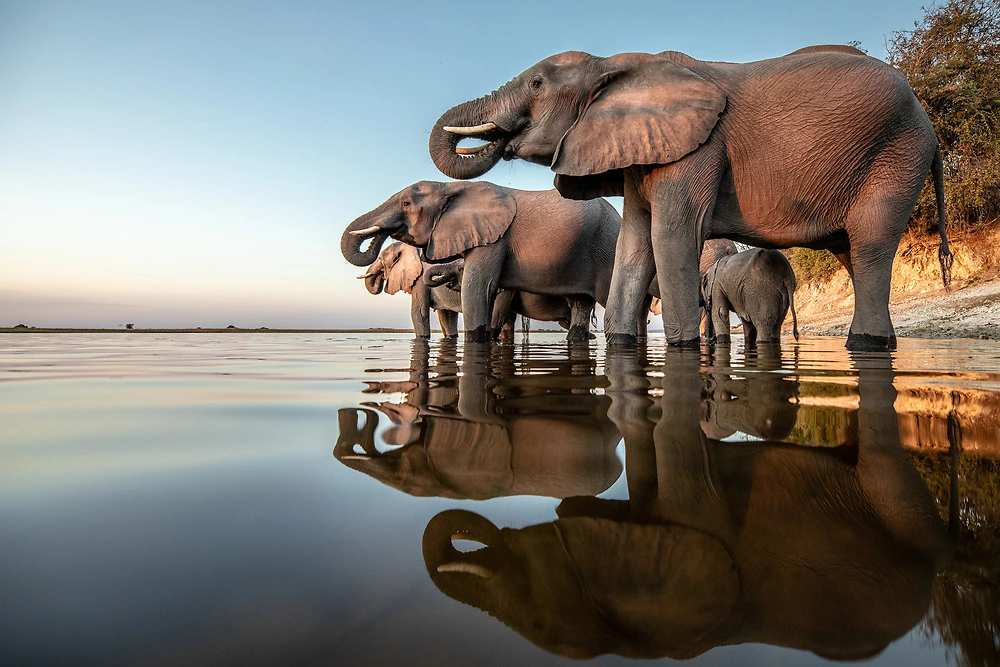
Mid-morning brings you back to the river. You board a pontoon at Ihaha landing, and the engine cuts to a drift. A fish eagle drops from a mahogany branch, talons extended. Buffalo wade chest-deep in the shallows, egrets riding their backs. Your guide points left: a crocodile, four metres long, slides off the mudbank without a ripple. The sun climbs. You reach for water, scan the far bank with binoculars, and catch a leopard's tail disappearing into riverine thicket.
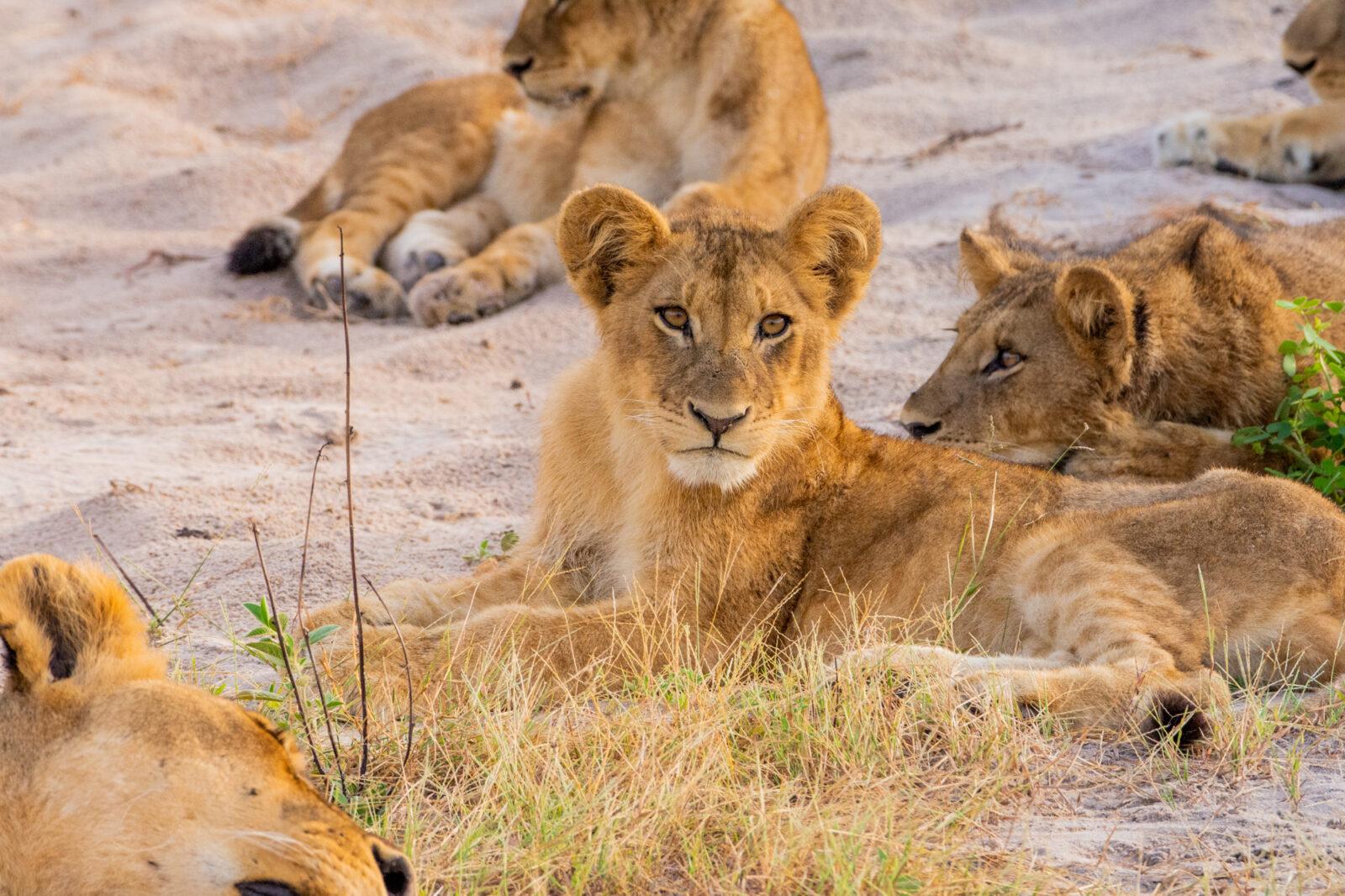
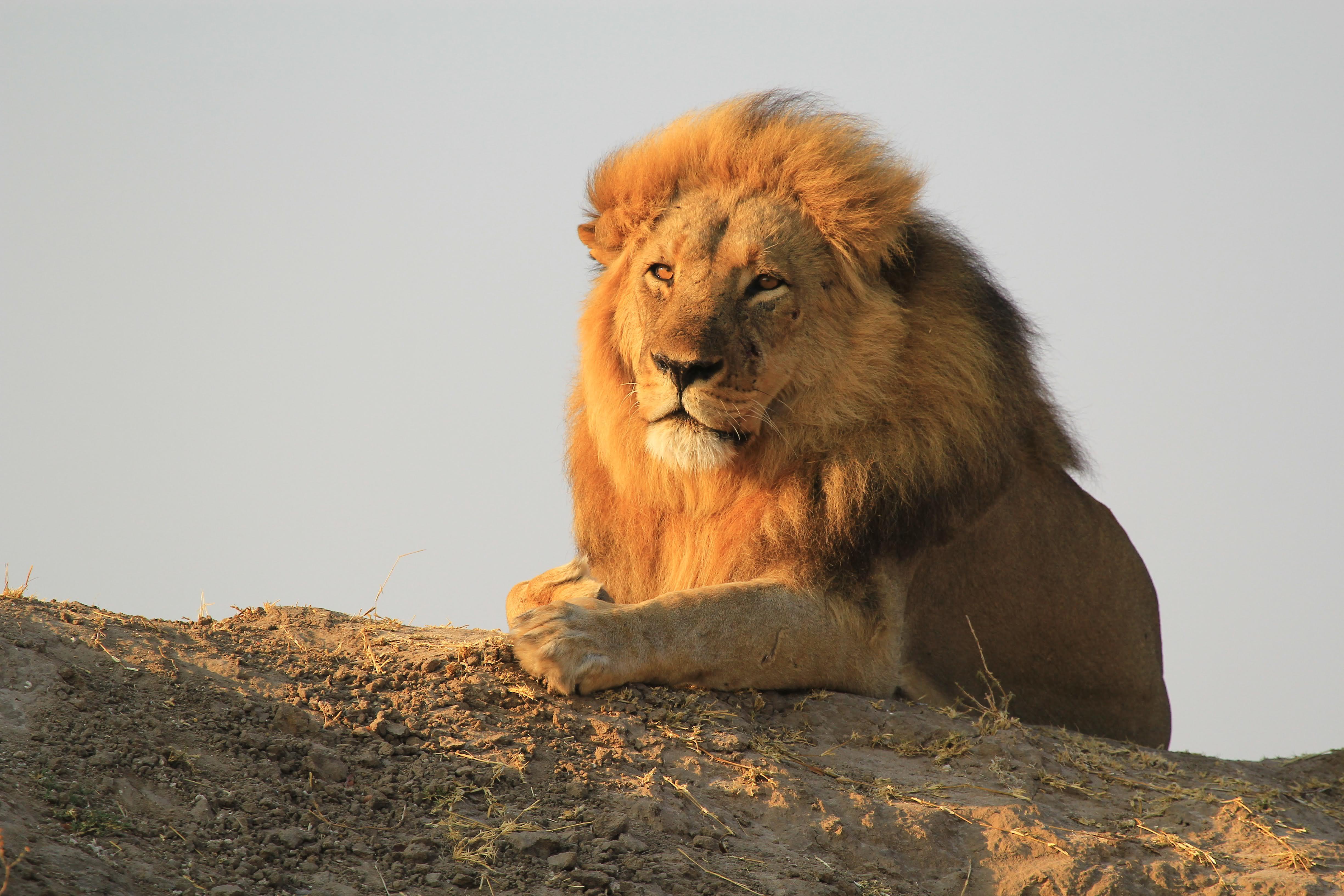
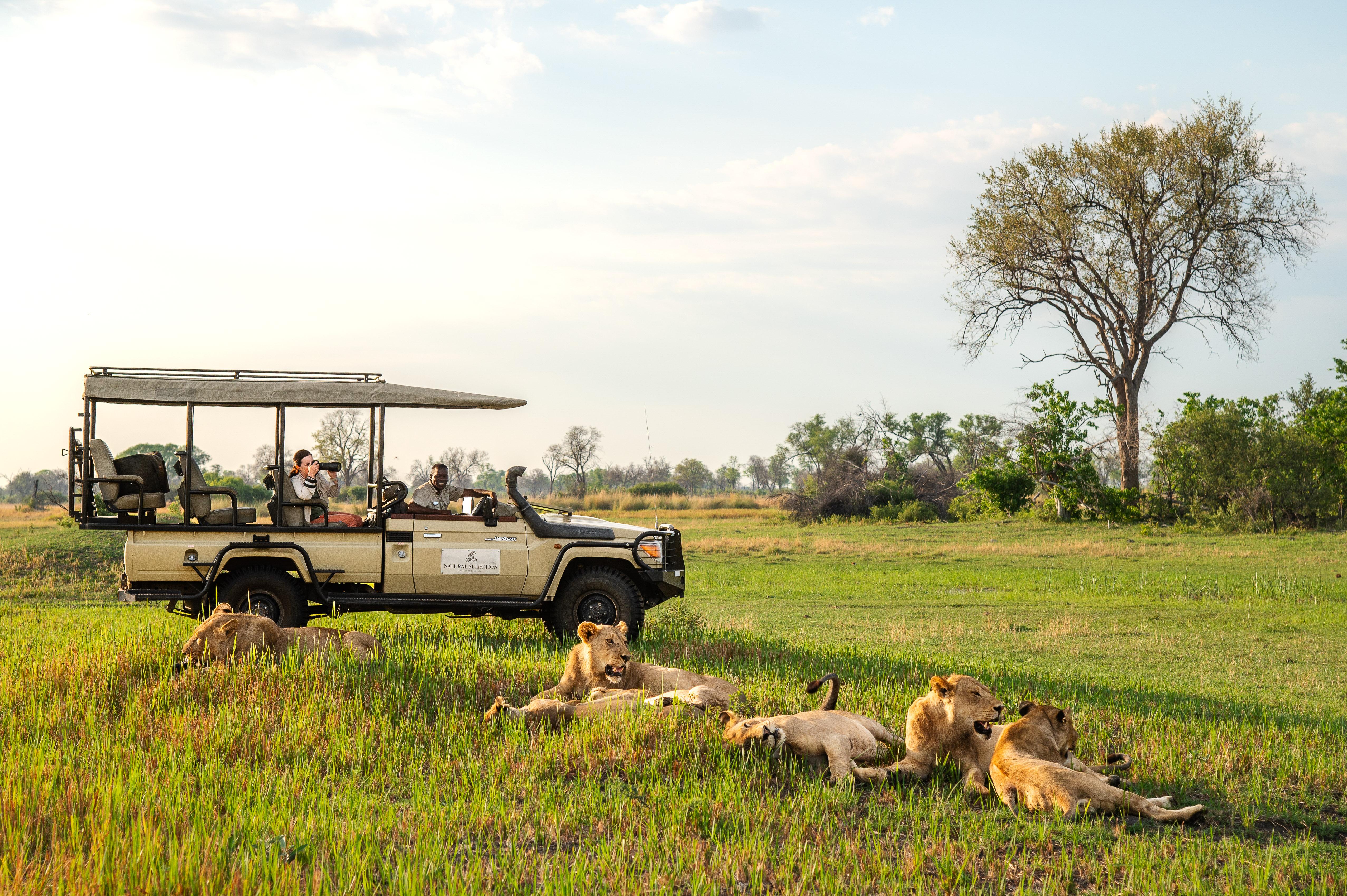
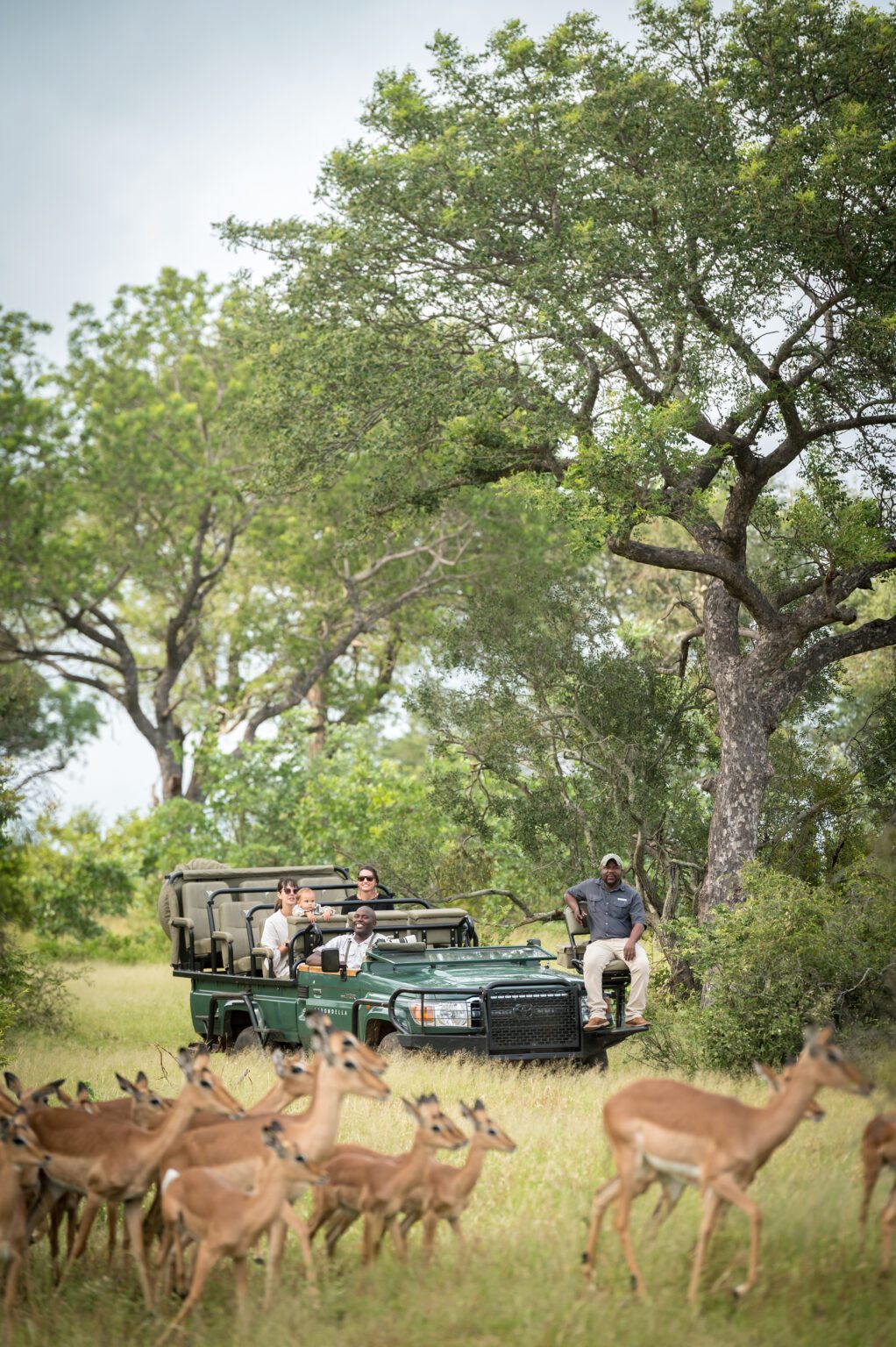
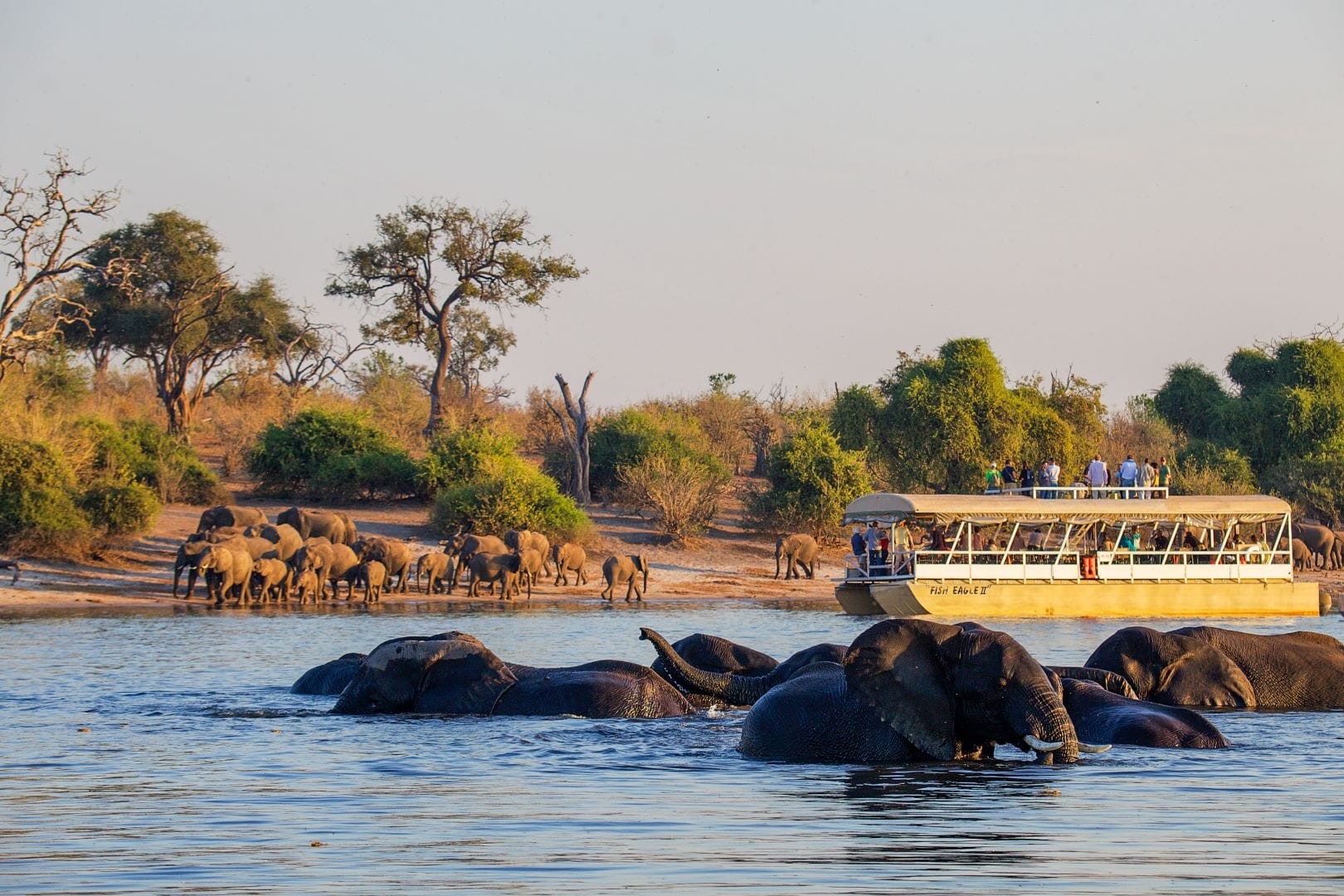
By 14:00 you're back on land, tracking the interior circuit. Impala scatter at your approach. A lion pride rests under a sausage tree, bellies distended. You photograph them from eight metres, then roll on. The light softens. At 17:00 you return to the river for a final cruise, and the elephant herds descend — hundreds strong, drinking, spraying, crossing to the Namibian side in single file.
All the details about your upcoming adventure in one place
Chobe National Park shelters roughly 120,000 elephants across 11,700 square kilometres of floodplain, woodland, and riverfront — the continent's most concentrated population.
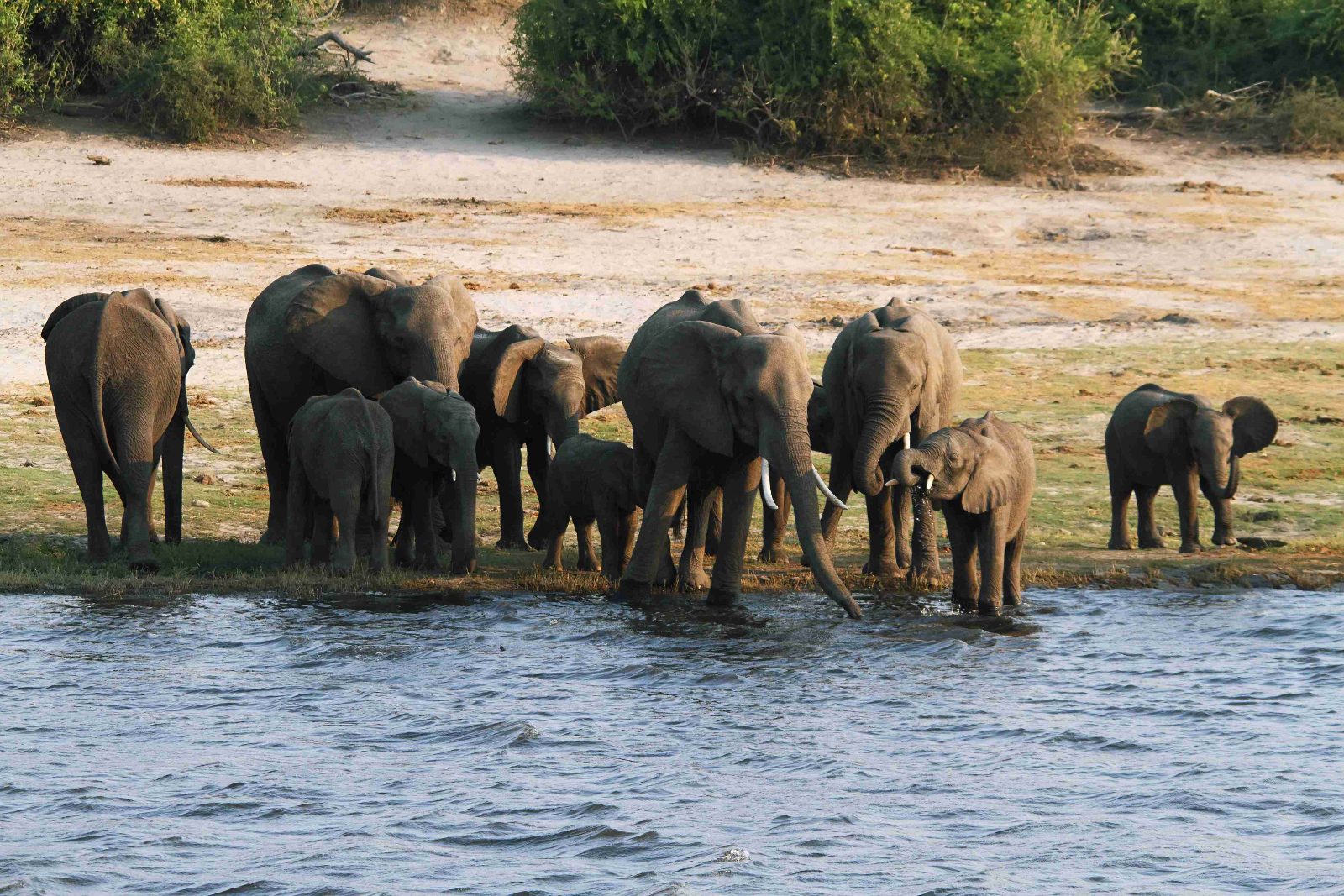
Gazetted in 1968 as Botswana's first protected reserve, the park sprawls along the Chobe River's northern boundary, where seasonal flooding dictates a six-month cycle of dispersal and congregation. Between May and October, dry-season conditions compress herds onto the riverbank, creating aggregations that routinely exceed 500 individuals in a single sighting.
The park's northern Serondela zone — terminus for most full day safari itineraries departing Kasane — occupies a transition belt where Kalahari sand meets alluvial soil. Riparian forest gives way to mopane woodland, acacia scrub, and open grassland within a five-kilometre corridor. This mosaic sustains 460 recorded bird species, alongside lion, leopard, buffalo, and sable antelope. The river itself remains perennial, fed by Angolan highlands runoff, and its meanders anchor dry-season game viewing when terrestrial waterholes elsewhere stand empty.
Access typically follows a two-part structure: morning game drives penetrate the woodland interior via the park's northern loop road, while afternoon river cruises track the Chobe's southern bank. The 270 BWP daily conservation fee supports anti-poaching patrols and wildlife veterinary units stationed at Kasane headquarters. Gates open at 05:30, and early entry remains critical — predator activity peaks before 08:00, and elephant herds descend to drink at first light. By midday, heat drives most species into shade, rendering the 11:00–15:00 window the least productive for mammal sightings.
Day trips from Victoria Falls — 80 kilometres west across the Kazungula border — account for the majority of international visitors. Transfer time via the sealed A33 highway runs 90 minutes each way, compressing in-park time to roughly six hours. Kasane-based departures eliminate the cross-border leg, allowing up to eight hours within the reserve. Both configurations pair terrestrial and aquatic components, a format designed to exploit the park's defining feature: the interface between permanent water and seasonal hinterland.
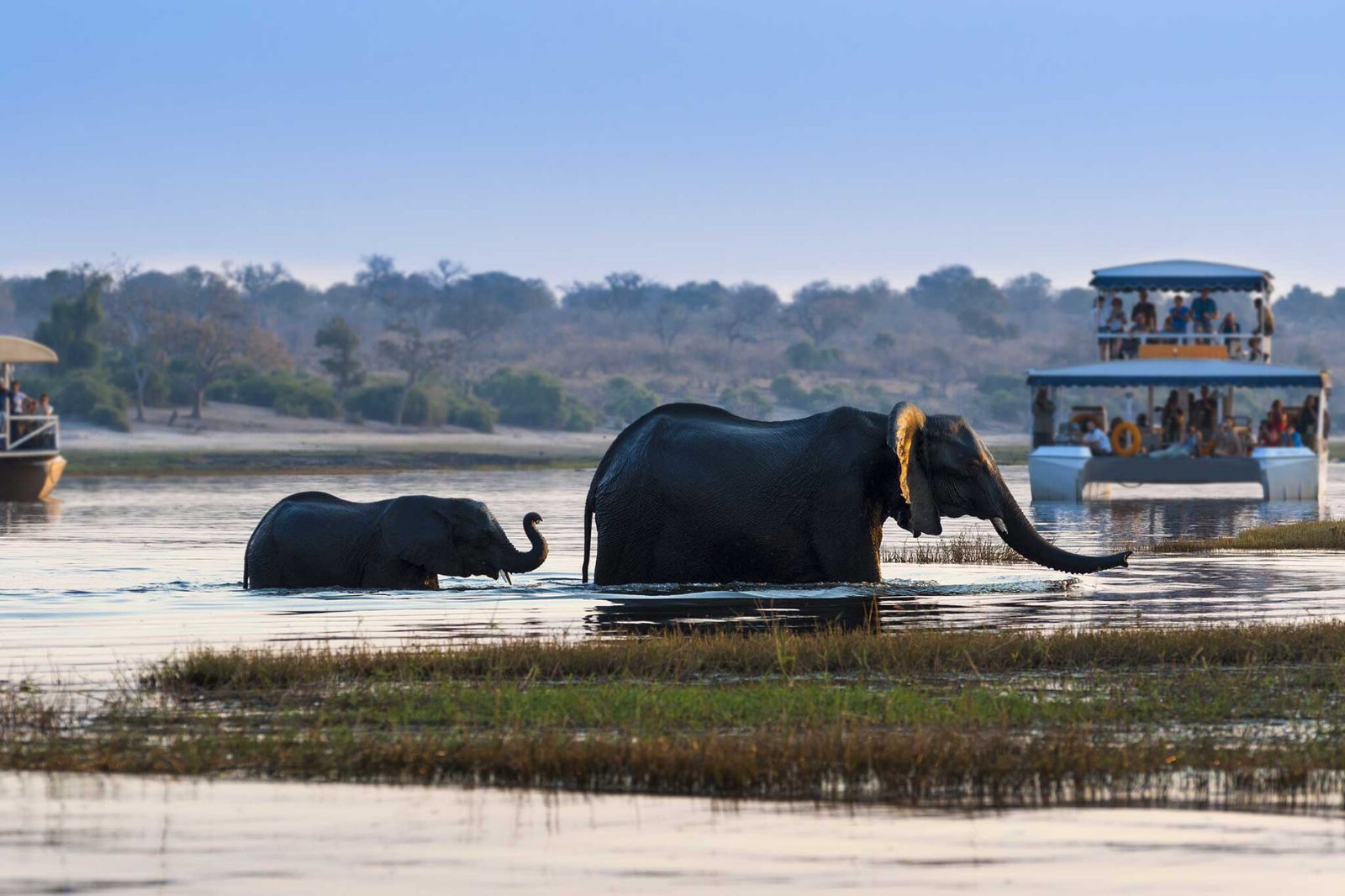
Between May and October, dry-season conditions compress herds onto the riverbank, creating aggregations that routinely exceed 500 individuals in a single sighting.
Wear neutral, non-bright clothing to avoid disturbing wildlife. Pack a warm layer for early morning, as temperatures on a chobe national park full day safari can be brisk.
Keep all belongings secured inside the vehicle. On a chobe national park full day safari, soft-sided bags are preferred for ease of storage in safari vehicles.
Photography is encouraged, but maintain a respectful distance from wildlife. A chobe national park full day safari provides excellent opportunities for river-level animal shots.
Children are welcome on game drives, though they must remain seated at all times. A chobe national park full day safari is educational, but ensure younger children are prepared for long hours.
The park terrain is rugged and consists of deep sand tracks. Visitors on a chobe national park full day safari should be prepared for bumpy conditions in open-top vehicles.
Bring plenty of drinking water, as dehydration is a risk in the heat. Many operators include lunch during a chobe national park full day safari, but check your booking details.
Operating hours
05:30–19:00 daily
Address
Chobe National Park, Kasane, Botswana
Entry requirements
Valid passport and park permits required
Best arrival window
06:00–09:00
Pack light
Soft-sided bags recommended for transfers
Gate access
Sedudu Gate is the main entrance for travelers
Entry fees are non-refundable once paid at the gate. Please confirm specific tour operator cancellation terms regarding your chobe national park full day safari.
Recommended time
Full day
To experience a chobe national park full day safari effectively, plan for at least 8 to 10 hours to observe elephant herds and predator activity along the riverfront. Arriving during the 06:00–09:00 window is necessary to secure better positioning before the midday heat drives wildlife into deeper cover. Managing your chobe national park full day safari tours around these peak periods helps avoid congestion at popular watering holes, while afternoon boat excursions offer a different perspective of the landscape.
Crowd levels through the day
Chobe National Park was born from a collision of colonial hunting culture and early conservation instinct. In 1931, the British colonial administration carved out a 24,000-square-kilometer hunting reserve in northern Bechuanaland, naming it Chobe Game Reserve after the river that traced its northern boundary. The reserve existed primarily to regulate trophy hunting and protect diminishing elephant populations from uncontrolled ivory poaching. For three decades, it functioned as a restricted hunting ground, with seasonal camps catering to wealthy European sportsmen arriving by boat along the Chobe River. In 1960, as Bechuanaland moved toward independence, the government reclassified Chobe as a non-hunting reserve, marking the first formal shift toward preservation. The transformation accelerated after Botswana gained independence in 1966. In 1968, President Seretse Khama signed the legislation elevating Chobe to national park status, making it Botswana's first. The park absorbed adjacent forest reserves, expanding to 10,566 square kilometers. Kasane, a small administrative post on the park's edge, began developing lodge infrastructure to accommodate the nascent photographic safari industry. Early Chobe national park full day safari tours followed the Chobe River's floodplains, where elephant herds congregated in staggering numbers. The 1970s and 1980s brought both growth and crisis. Poaching syndicates crossed from Zambia and Zimbabwe, decimating rhino populations; by 1992, Chobe's black rhinos were extinct in the wild. Anti-poaching patrols intensified, and by the mid-1990s, the park's elephant population had rebounded to over 50,000, creating new pressures on riparian vegetation. Today, Chobe anchors Botswana's high-value, low-volume tourism model. The Savuti Marsh and Linyanti wetlands remain critical dry-season refuges, and chobe national park full day safari tickets now fund cross-border conservation corridors linking Chobe to Zimbabwe's Hwange and Zambia's Kafue.
British colonial administration establishes Chobe Game Reserve as a 24,000 km² controlled hunting area.
Bechuanaland government reclassifies Chobe as a non-hunting reserve, halting trophy licenses.
President Seretse Khama declares Chobe National Park, Botswana's first, covering 10,566 km².
Cross-border poaching syndicates drive Chobe's black rhino population to local extinction by 1992.
Elephant population rebounds to over 50,000 following sustained anti-poaching operations.
Chobe anchors transfrontier conservation initiatives linking Botswana, Zimbabwe, Zambia, Namibia, and Angola.
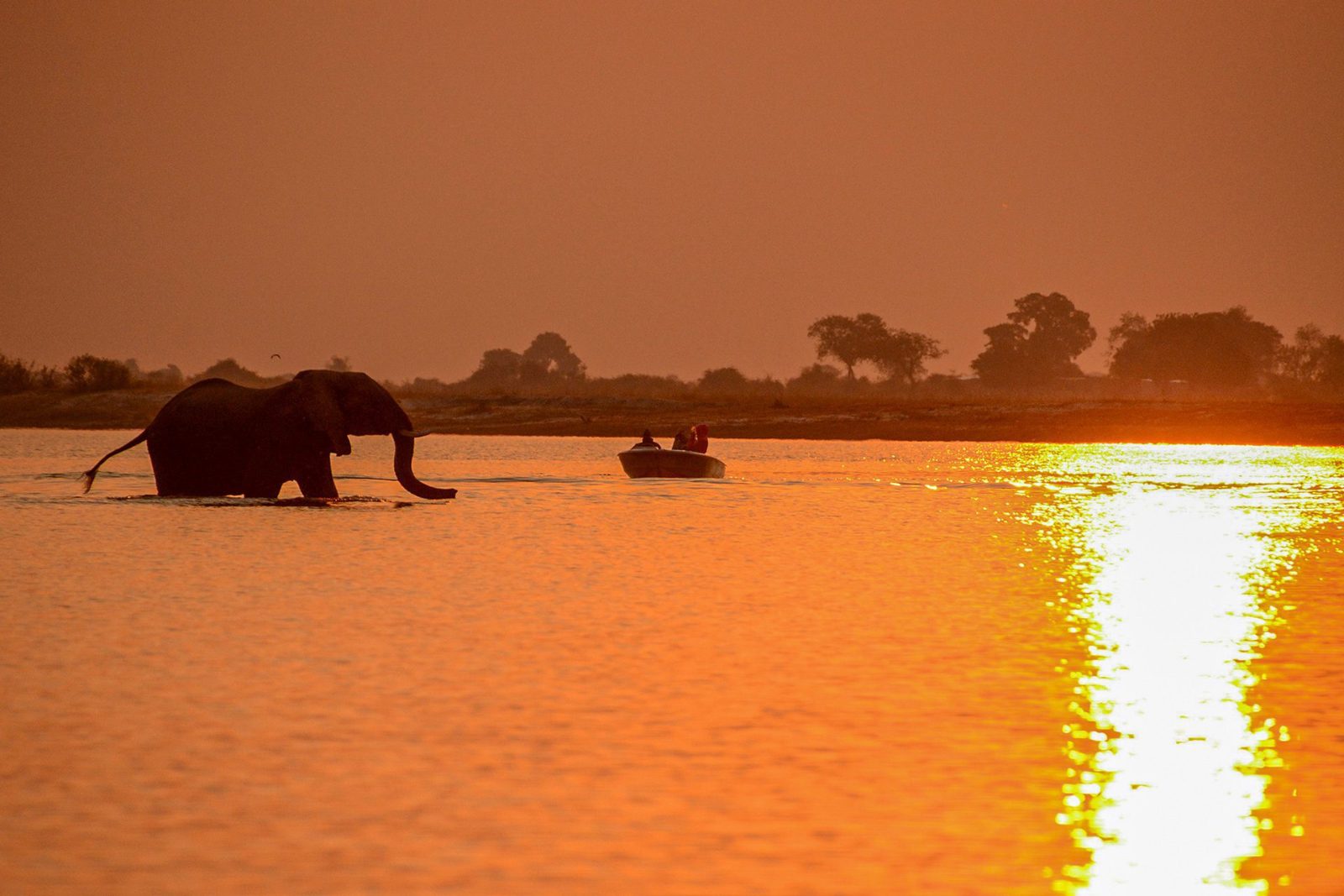
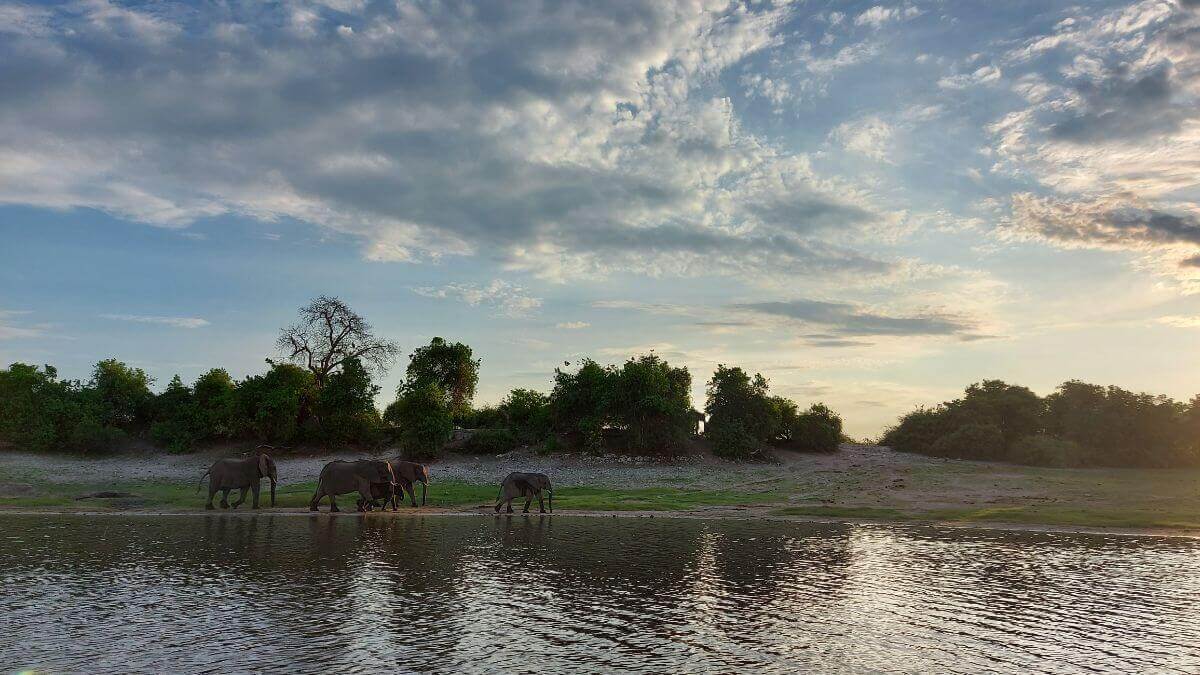
Position your camera along the northern boundary to capture elephant herds wading into the water. This is a primary zone for your chobe national park full day safari where banks offer clear sightlines of predators and ungulates.
Focus your lens on this lush flood plain where buffalo and waterbuck congregate in high density. Access is typically by boat which provides a unique low-angle perspective for those booking chobe national park full day safari tours.
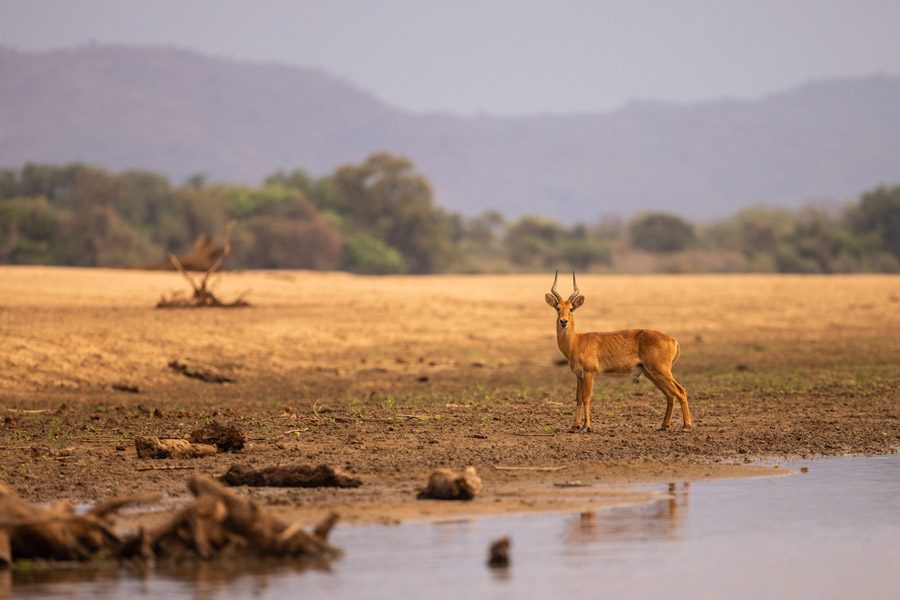
Locate these open grasslands to spot the rare puku antelope against the backdrop of the riparian forest. These areas are reachable via designated tracks often included in a chobe national park full day safari tour.
Capture images of large tuskers grazing beneath the shade of towering teak and mahogany trees. This area is a popular stop for visitors holding chobe national park full day safari tickets who want to photograph woodland birds.
Planning a chobe national park full day safari requires careful preparation to ensure young explorers remain comfortable during long hours in the bush. Balancing wildlife spotting with frequent breaks is key to a successful family experience in this iconic wilderness.
Open-sided safari vehicles provide excellent views but offer little protection from dust and wind, so bring layers and neck buffs for children. Choosing a chobe national park full day safari tour that includes a mix of boat and land-based game drives helps keep restless kids engaged.;Pacing
Dining options within the reserve are limited, making a chobe national park full day safari well-served by nearby lodges in Kasane. Visitors often rely on these established venues to secure meals before or after booking their chobe national park full day safari tours.
Enjoy buffet-style dining overlooking the river, perfect for replenishing after chobe national park full day safari tickets are redeemed. The menu features local game and fresh catches.;The Old House
Everything you need to know for your journey
Chobe National Park is open from 05:30–19:00 daily.
The conservation fee is 270 BWP per foreign adult, per day.
The best arrival window is 06:00–09:00 to see animals before the midday heat.
Yes, families are welcome on a chobe national park full day safari, provided children follow safety protocols.
Guided tours for a chobe national park full day safari typically use specialized 4x4 vehicles, so you do not need to drive yourself.
Yes, packing water and snacks is highly recommended for a full day trip.
Yes, photography is permitted and encouraged during your chobe national park full day safari.
Wear loose, light-colored clothing and bring a warm jacket for early morning game drives.
You can easily combine your chobe national park full day safari with a visit to the nearby Kasane town or the Kazungula border.
Join thousands of happy travelers who have discovered this incredible experience
Book Your Experience Now